
Energy Centre
Data centres need a highly reliable supply of electricity to operate, but new proposals often face long waiting times before a National Grid connection is available. Consequently, the first phase of our proposal will be powered by an on-site energy centre featuring Solid Oxide Fuel Cells (SOFCs), whilst later phases will eventually be powered through a National Grid connection via a separate on-site substation.
SOFCs have been deliberately chosen for our energy centre due to their high efficiency, quiet operation, low water consumption and low emissions compared to traditional generators.
What Are Solid Oxide Fuel Cells (SOFCs)?
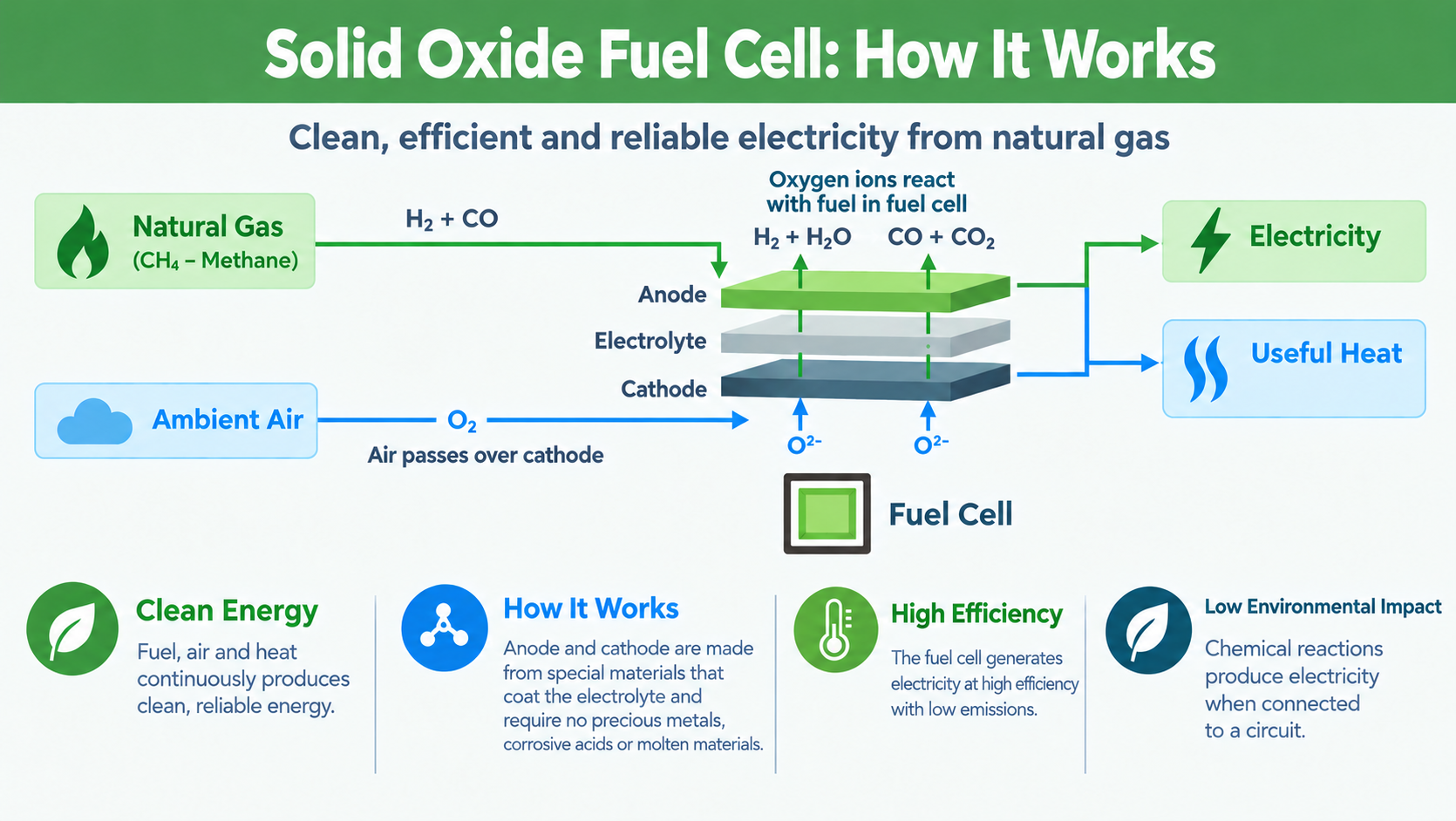
Solid Oxide Fuel Cells (SOFCs) generate electricity in a cleaner and more efficient way than traditional power generation systems.
Unlike conventional generators, which produce electricity by burning fuel, SOFCs generate electricity through an electrochemical process. This means they can convert fuels such as natural gas, and potentially renewable fuels like biogas, directly into electricity with very high efficiency.
Because the process does not involve combustion, SOFCs can provide reliable power while producing lower levels of air pollutants and noise than traditional generators.
How Do SOFCs Work?
SOFCs generate electricity through a high temperature electrochemical process, converting fuel directly into electrical energy without the need for combustion. This process can achieve high electrical efficiencies while producing heat as a secondary by product.
Warm air is fed into one side of the fuel cell, while fuel, such as natural gas or biomethane, is supplied to the other side. Inside the fuel cell, specially designed ceramic materials and electrodes enable an electrochemical reaction that converts the fuel into electricity. As part of this process, water vapour and carbon dioxide (CO₂) are also produced.
This method of generating power is highly efficient, with SOFC systems typically achieving electrical efficiencies of around 40% to 60%, significantly higher than most conventional electricity generation technologies.
Low Water Use
One of the advantages of SOFC technology is its minimal water consumption.
The electrochemical process naturally produces water, which can be recycled within the system to generate the steam required for operation. As a result, there is typically no requirement for additional water during normal operation.
Low Emissions and Environmental Benefits
Because SOFCs do not rely on combustion, they produce very low levels of air pollutants such as nitrogen oxides (NOx) and sulphur oxides (SOx). They also operate quietly compared with conventional generators.
Like all systems powered by natural gas or biogas, SOFCs do produce carbon dioxide (CO₂). However, their high efficiency means they require less fuel to generate the same amount of electricity compared with traditional diesel generators or gas turbines. This results in lower carbon dioxide emissions per unit of electricity produced, helping to reduce the overall environmental impact of power generation.
Contact Us
If you have any queries, please contact Jamie O’Sullivan of SP Broadway on 07503 201876 or at jamie@spbroadway.com